


Utility Expense Management in Property Management
March 17, 2026Bookkeeping Software for Rental Property: 2026 Guide for Serious Landlords & Investors
Introduction: Why Rental Property Bookkeeping Software Matters in 2026
Spreadsheets work fine when you own two duplexes and manage everything yourself. But the moment you cross five doors or add a second LLC, the cracks start showing. Formula errors creep in. Version control becomes a nightmare. Reconciling multiple bank accounts turns into a monthly headache that eats 10-20 hours you don’t have.
Clean books directly impact your ability to execute in 2026. Lenders reviewing your refinance application need property-level P&L statements showing debt service coverage ratios above 1.25x. JV partners want standardized owner statements with IRR projections before committing capital. Messy records delay refinances and scare off investors at precisely the wrong moment.
Bookkeeping software for rental property is fundamentally different from generic small business accounting tools. At 20 Mile Consulting, we clean up real estate books every week and see exactly which software setups actually work in the field. This guide covers what features to look for, where software stops helping, and when to pair it with expert bookkeeping support.
What Is Rental Property Bookkeeping Software (and How Is It Different from Generic Accounting Tools)?
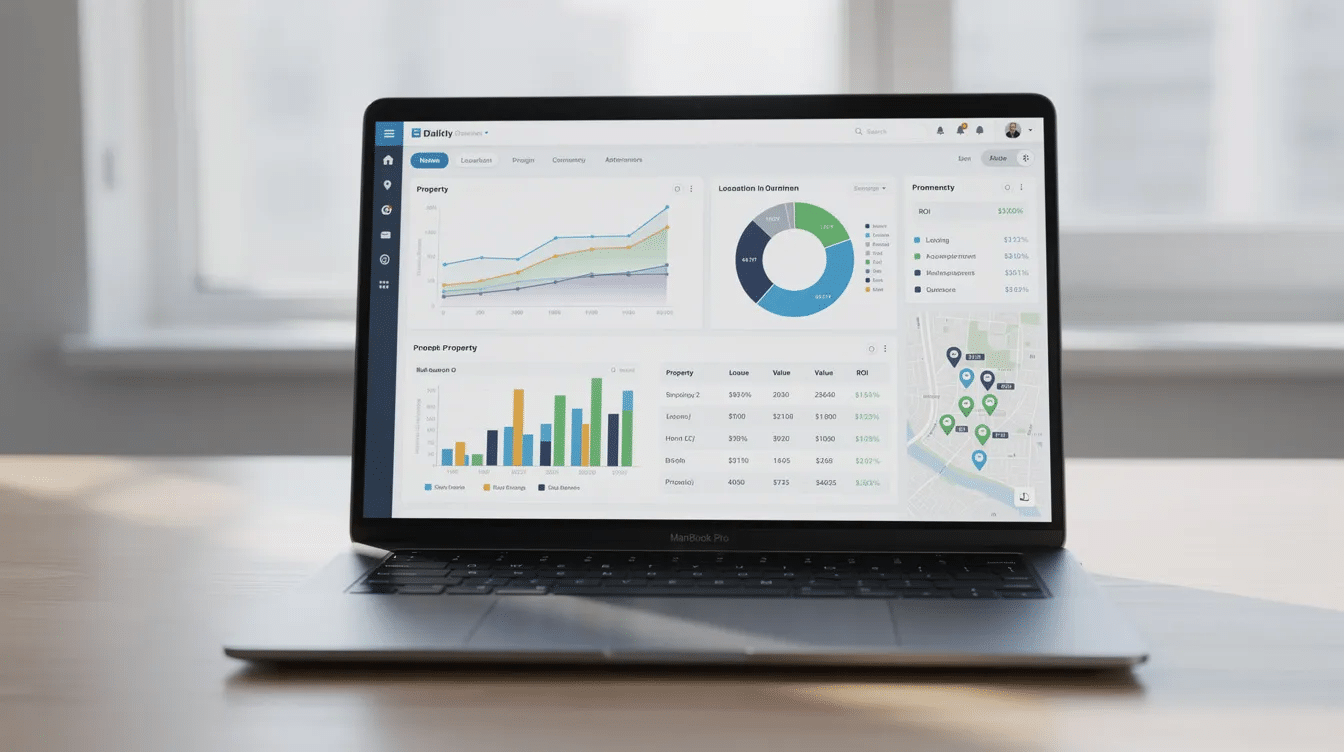
Rental property accounting software refers to specialized digital tools designed for landlords and property investors. These platforms handle unit-level income and expenses, security deposits as trust liabilities, owner draws from equity accounts, and mortgage escrows that separate principal from interest and taxes.
Generic platforms like vanilla QuickBooks Online or Xero require extensive customization. You need to set up classes or locations for each property, configure manual trust accounting to comply with state laws, and build custom reports for Schedule E tax forms. Consider a landlord managing eight single-family rentals across two states using a single checking account. Without heavy manual tagging, personal transactions commingle with rental ones, creating audit problems and complicating lender reviews.
The goal extends beyond tax compliance. Yes, you need Schedule E forms and 1099-NEC generation for contractors. But effective rental property bookkeeping also delivers operational visibility: vacancy cost analysis, turn expenses by unit, and per-door profitability that informs your 2026 acquisition decisions.
Key Features to Look for in Bookkeeping Software for Rental Property
Not all landlord software is equal. Some platforms prioritize property management first with accounting bolted on. Others build accounting-first with light management features. Understanding the difference helps you choose tools that match your actual needs.
Critical feature groups include granular income and expense tracking, automated bank feeds, real estate-specific reporting, tax support with Schedule E mapping, and permission controls for teams. Look for support for multiple LLCs and bank accounts, per-unit P&L generation, and auto-categorization rules for utilities, HOA dues, and management fees. At 20 Mile Consulting, we routinely reconfigure charts of accounts to match software structures, so choosing platforms that support good real estate charts from the start is crucial.
Income & Expense Tracking by Property and Unit
Granular tracking by property and unit matters for refinancing, investor reporting, and sale decisions. When you can see that Unit B in your fourplex generates $200 monthly profit while Unit C loses $150 after turn costs, you make smarter capital allocation choices.
Good software lets you tag each transaction to a specific door plus category. Think “Repairs – Turnover” for that vacancy make-ready or “Utilities – Water” for the meter bill. Automated recurring transactions handle predictable items like property management fees at 8-10% of gross rents, monthly pest control at $50/unit, and landscaping contracts.
The danger of poor tracking shows up in lumped categories. When all repairs go into one generic account, you miss that one building incurs 60% higher maintenance costs due to deferred issues. That chronically underperforming fourplex stays hidden until you try to refinance and can’t explain the cash flow numbers.
Bank Feeds & Reconciliation for Multiple Accounts
Direct bank and credit card connections matter enormously when you’re juggling operating accounts, security deposit trusts, and reserve accounts. Monthly bank reconciliation catches missed ACH rent deposits, duplicate utility payments, and incorrect vendor pulls before small problems become big ones.
Consider a portfolio with three checking accounts and two credit cards. Manual data entry invites errors. Automated bank feeds import transactions, match 95% automatically, and flag exceptions for review. This process typically saves 5-10 hours monthly for mid-sized portfolios.
The reconciliation workflow becomes manageable with the right setup. Review feeds daily or weekly, accept auto-matched items, manually categorize exceptions, then perform three-way reconciliation comparing bank statements, book balances, and tenant ledgers. At 20 Mile Consulting, we establish these workflows and close books monthly for property management clients as standard practice.
Real Estate–Specific Reporting & Tax Readiness
Generic financial reports don’t cut it for rental properties. You need property-level P&L statements, owner statements with equity tracking, rent rolls showing occupancy and collections, and cash flow reports broken out by LLC.
Strong software maps your chart of accounts directly to IRS Schedule E lines. Line 5 captures utilities, Line 14 handles depreciation, and everything flows correctly at tax time. The platform should generate 1099-NEC forms for contractors receiving over $600 and handle e-filing to the IRS by January deadlines.
These reports serve purposes far beyond tax preparation. Lender conversations require DSCR reports for Fannie Mae loans. JV investor updates need standardized portfolio P&L showing vacancy drag and NOI trends. At 20 Mile Consulting, a common project involves transforming messy software exports into lender-ready reporting packages that actually close deals.
Tenant, Lease, and Security Deposit Handling
Not all bookkeeping software handles leases and tenants. Some integrate with separate property management platforms while others include these features natively. Confirm which approach your chosen software takes.
Security deposit tracking requires trust accounting to segregate deposits as liabilities. You need to record move-in receipts, track interest accrual where required by state law, and document move-out dispositions with itemized deductions. Twelve states require deposit interest payments, with California mandating 5% or market rate.
Sloppy deposit tracking creates compliance exposure. New York penalties reach $2,500 per violation. We frequently see deposits mixed with operating funds when onboarding new clients, requiring painful reconstruction to establish clean trust accounting.
Scalability, Integrations, and Workflow Automation
Your software needs to handle growth from 5 to 50+ units without a total system rebuild. Look for unlimited properties in subscription tiers, integrations with ACH processors like Stripe for rent payments, and connections to maintenance ticketing tools.
Automations reduce ongoing effort. Rules for auto-categorizing common vendors achieve 95% accuracy with modern AI-powered platforms. Recurring journal entries handle loan amortization, allocating principal versus interest as payments shift over the loan term. Short-term rental investors need integration with Airbnb and Vrbo payouts, auto-splitting revenue by owner agreements.
Scalable systems reduce the pain and cost of later cleanups. Firms like 20 Mile Consulting are often hired to untangle portfolios that outgrew their original software without proper migration planning.
Ease of Use, Support, and Accounting Leadership
Intuitive dashboards and simple workflows matter for DIY landlords and in-house bookkeepers alike. Mobile receipt capture with OCR, clear navigation, and at-a-glance portfolio cash position help users actually engage with the software.
But there’s a critical difference between basic tech support and strategic guidance from experienced real estate accounting leadership. We’ve seen property managers whose books were technically “in software” but completely unusable. Twelve months of unreconciled transactions, no month-end close process, and reports that showed nothing meaningful. The tool existed, but the processes didn’t.
Software plus strong processes beats software alone every time. 20 Mile Consulting provides US-based oversight through Controller and Fractional CFO services to ensure software is configured correctly and used consistently.

Popular Types of Bookkeeping Software for Rental Property (and Where They Fit)
Rather than ranking every brand, understanding the main categories helps you evaluate options. Real estate investors typically use three types: landlord-first apps for small portfolios, general accounting platforms configured for real estate, and full property management suites with accounting modules.
At 20 Mile Consulting, we inherit all three types regularly and standardize reporting across them when clients have mixed tech stacks from acquisitions or legacy systems.
Landlord-Focused Apps for Small Portfolios
Rentvine and Buildium are the best for smaller portfolios, yet still offer enough firepower if you are aiming to scale. For larger portfolios exceeding 100 units, AppFolio remains the most popular choice due to its ease of use and robust reporting features. These platforms provide comprehensive property management tools alongside their accounting capabilities, making them ideal for landlords who want an integrated solution.
With features such as automated rent reminders, online rent collection, and lease management, they streamline rental property management and financial tracking. Additionally, their cloud based accounting software allows property owners and managers to access rental finances remotely via mobile devices, enhancing flexibility and responsiveness. For landlords managing multiple rental properties, these systems support detailed property specific financial reports, helping maximize deductions and simplify tax filing. Their customizable features and user friendly interfaces cater to both independent landlords and property management companies, ensuring efficient rent tracking and expense management across multiple properties.
General Accounting Platforms Configured for Real Estate
Tools like QuickBooks Online work extremely well when properly configured with properties as classes, departments, or tracking categories. You gain flexibility through custom charts of accounts, detailed budgeting, and integration with BI tools for portfolio analytics.
The warning: misconfiguration creates expensive problems. No classes, no property tags, and no reconciliations lead to cleanup projects costing thousands of dollars. The same software produces wildly different results depending on setup. Before reconfiguration, you see only portfolio totals. After proper setup, you see per-property net income showing which duplexes generate $300 monthly and which drain cash.
Where Bookkeeping Software Ends and Real Estate Bookkeeping Services Begin
Many owners assume software will “fix the books.” It won’t. Software is only as good as the processes and people behind it.
Common pain points we see in portfolios already using modern software include accounts unreconciled for 12+ months, intercompany loans between LLCs not tracked, misapplied security deposits creating compliance exposure, and missing accruals for prepaid rents. The transactions exist in the system, but nobody closed the books properly.
Outsourced real estate bookkeeping services handle daily and weekly transaction coding, monthly close, variance analysis, and lender reporting. US-based accounting leadership through Controller and Fractional CFO roles oversees the system and helps with cash flow forecasting and scaling decisions. The distinction matters: data entry differs fundamentally from financial operations and leadership.
Cleanup & Modernization: Fixing Broken Books in Existing Software
A typical cleanup scenario involves three LLCs, 40 units, and transactions in software but no reconciliations and no clear property-level reporting. The data exists, but the books are unusable.
Cleanup projects include reconstructing beginning balances, reclassifying thousands of transactions, fixing owner equity through journal entries, and rebuilding the chart of accounts. Modernization redesigns workflows: bank feed rules, closing calendars, and approval processes for vendor payments. Costs range from $3,000-$15,000 depending on complexity.
20 Mile Consulting’s core offering brings clarity and control back to these messy environments so owners trust their numbers again. If your books are a mess, you’re not alone, and the situation is fixable.
Ongoing Financial Operations, Reporting, and Fractional Leadership
After cleanup, keeping books clean requires consistent month-end close and review. Weekly bank feed review, monthly reconciliations, owner statement preparation, and quarterly portfolio performance reviews maintain financial clarity.
Fractional Controller and CFO support adds strategic value through budgeting, unit economics analysis, and capital planning for 2026-2027 expansion. Standardized reporting has helped our property management clients raise capital and win new management contracts by demonstrating institutional-quality financial data.
How to Choose the Right Rental Property Bookkeeping Setup for Your Portfolio
The right answer depends on portfolio size, strategy, team capacity, and growth plans for the next 2-3 years. A simple framework: under 5 units, DIY with a lightweight app. Between 5-50 units, consider hybrid approaches pairing accounting software with outsourced monthly close. Above 50 units, full PM systems with Controller oversight typically make sense.
Consider your number of LLCs, whether you use third-party property managers, your mix of long-term versus short-term rentals, and investor or lender reporting requirements. 20 Mile Consulting performs brief systems and books reviews to recommend 12-24 month roadmaps covering software, processes, and roles, drawing on US-based real estate accounting expertise and values built around transparency and continuous improvement.
DIY vs. Outsourced vs. Hybrid Approaches
DIY bookkeeping costs less upfront but carries higher risk of errors and neglected reconciliations. Industry surveys show 20% error rates in categorization when owners handle everything themselves.
Fully outsourced bookkeeping means specialists handle day-to-day work while you review high-level reports and dashboards. A hybrid model works well for many: internal staff handle basic coding while 20 Mile Consulting provides monthly close, review, and leadership oversight.
Consider a 2026 property management company with an in-house AP clerk handling invoice entry while a 20 Mile Consulting Controller owns reconciliations, reporting, and financial analysis. This division leverages internal capacity while ensuring professional-grade output.
Next Steps: Get More From Your Rental Property Bookkeeping Software
Software is essential, but it’s only one piece of a scalable real estate finance function. The right tools paired with the right processes and leadership create financial data you can actually trust.
Audit your current setup this month. Are all accounts reconciled through May 2026? Can you see profit per property at a glance? Are security deposits tracked correctly and segregated? If not, you have work to do.
Reach out to 20 Mile Consulting for a discovery call to review your existing books and software stack. We work inside whatever bookkeeping software you already use, optimizing rather than forcing a switch. Build a finance function that supports portfolio growth through 2026 and beyond, not just getting through the next tax season.






40 Comments
https://shorturl.fm/PoCZm
https://shorturl.fm/87RxS
https://shorturl.fm/ArXvv
https://shorturl.fm/yFu0E
https://shorturl.fm/Q5N4g
https://shorturl.fm/fs6B2
https://shorturl.fm/dguad
https://shorturl.fm/QBnpH
https://shorturl.fm/HiWjr
https://shorturl.fm/1j1in
https://shorturl.fm/mVaSZ
https://shorturl.fm/5QaIF
https://shorturl.fm/JugpH
https://shorturl.fm/hlQFo
https://shorturl.fm/Frtsn
https://shorturl.fm/tvFUz
https://shorturl.fm/vCt6x
https://shorturl.fm/vVwq5
https://shorturl.fm/BGnmk
https://shorturl.fm/V2Bp0
https://shorturl.fm/WNRc8
https://shorturl.fm/n4sjM
https://shorturl.fm/WSl5t
https://shorturl.fm/ByBP7
Im 4466,yahoo
https://shorturl.fm/hUmJg
https://shorturl.fm/c0fVs
https://shorturl.fm/Hi0qV
https://shorturl.fm/8CKwb
https://shorturl.fm/UcF40
https://shorturl.fm/nWqhZ
https://shorturl.fm/DxG7v
https://shorturl.fm/RNpeR
https://shorturl.fm/VL6MD
https://shorturl.fm/0eTgD
https://shorturl.fm/FOE54
Đọc xong thấy rất bổ ích. Letco chuyên du học Hàn Quốc, tư vấn 1-1 theo năng lực và ngân sách từng bạn. Ghé thăm letco.vn để được hỗ trợ.
Đọc xong thấy rất bổ ích. Letco chuyên du học Hàn Quốc, tư vấn 1-1 theo năng lực và ngân sách từng bạn. Ghé thăm letco.vn để được hỗ trợ.
Cảm ơn bài viết. Với dịch vụ du học Hàn Quốc chuyên nghiệp, Letco giúp bạn tiết kiệm thời gian và chi phí chuẩn bị hồ sơ. Truy cập letco.vn để biết thêm.
Thông tin hữu ích quá. Letco tự hào là công ty tư vấn du học Hàn Quốc uy tín, cam kết đồng hành đến khi bạn nhập học thành công. Xem thêm tại letco.vn.